
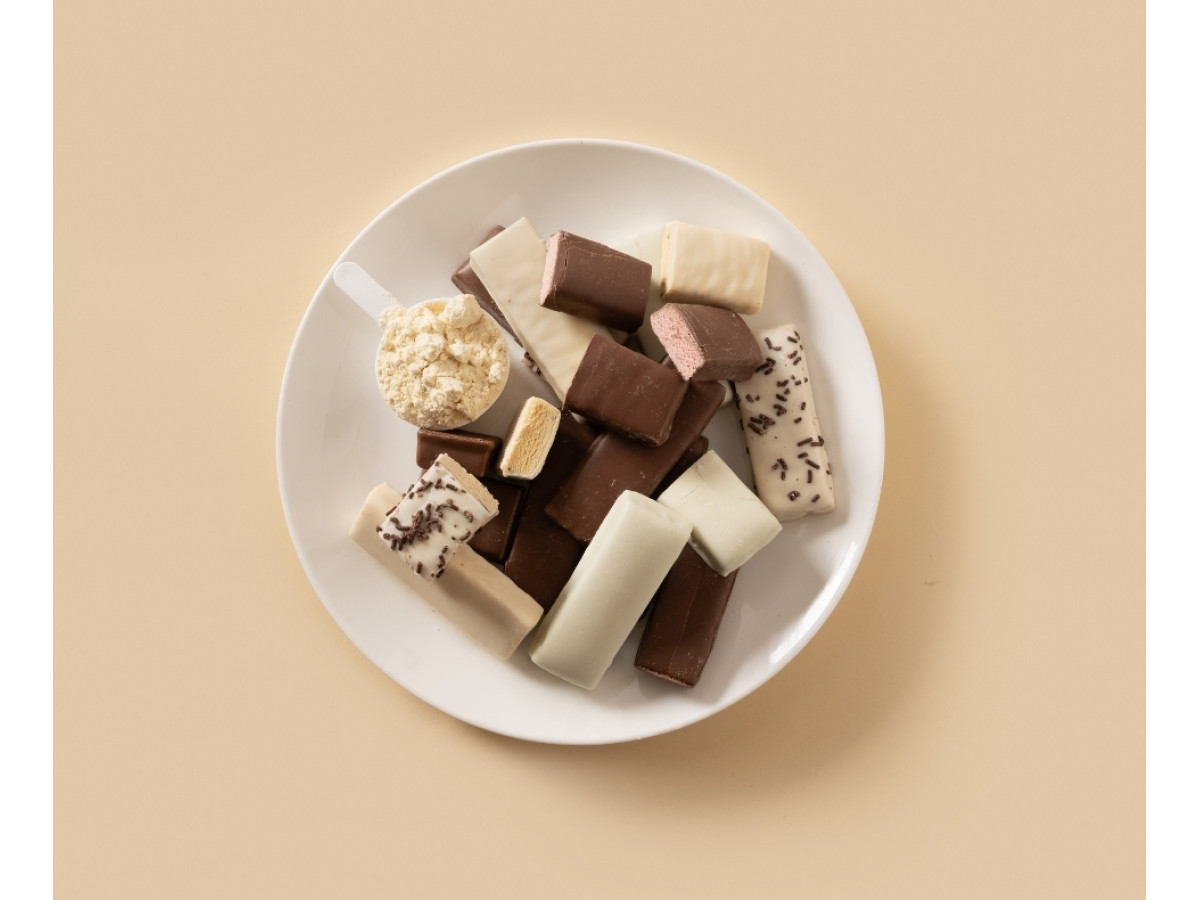
Sugar-free protein bars are often perceived as a more conscious choice. At the same time, the label “sugar-free” does not always mean the product is automatically suitable for a daily diet. For a bar to truly fulfill its function — supplementing your diet with protein and serving as a nutritious snack — it is important to understand how to read the ingredient list and which components matter most.
What Does “Sugar-Free” Mean in Protein Bars?
In most cases, “sugar-free” means the absence of added white refined sugar. Carbohydrates are still present in the product — this is normal and expected.
Sweetness in such bars may come from:
-
dried fruits or their derivatives;
-
dairy components;
-
natural sweeteners in small amounts.
This does not mean a complete elimination of sugars, but rather a change in their source and role within the composition.
What to Pay Attention to First
1. Source and Amount of Protein
A protein bar makes sense only if it actually contains a meaningful amount of protein. It is also important to consider the source — dairy and plant proteins differ in amino acid profiles and digestibility.
Protein in the ingredient list should not be decorative, but functional — increasing the nutritional value of the snack.
2. The Role of Sweet Components
Even without added sugar, sweet ingredients can dominate the composition. If syrups or concentrated sweeteners appear among the first ingredients, the bar resembles a dessert more than a protein snack.
For daily use, options where sweetness is not the foundation of the product are more suitable.
3. Presence of Fiber
Fiber in a protein bar helps to:
-
slow down carbohydrate absorption;
-
support more stable energy levels;
-
prolong the feeling of fullness.
It is the combination of protein and fiber that makes a bar a functional snack rather than just a sweet product with added protein.
4. Type of Fats
Fats in protein bars may come from nuts, seeds, or cocoa products — these are natural components of whole foods. In contrast, refined fats and hydrogenated oils are used for technological purposes and do not increase the product’s nutritional value.
For a regular diet, it is important that the fats included are not merely “technical,” but nutritionally meaningful.
What Should You Be Cautious About?
-
when syrups are the main ingredients;
-
when protein is present in minimal amounts;
-
when the product is overloaded with sweeteners and flavorings;
-
when the primary function of the bar is taste rather than nutrition.
This does not mean such products are “bad,” but they serve a different role — closer to dessert.
What Should You Not Be Afraid Of?
-
moderate calorie content if the calories come from protein, nuts, and whole ingredients;
-
the presence of fats if they are a natural part of the composition;
-
carbohydrates if they do not dominate and are combined with protein and fiber.
Who Are Sugar-Free Protein Bars Suitable For?
Protein is an essential nutrient for everyone, not only for athletes. It plays a role in tissue repair, maintaining muscle mass, supporting immune function, and creating long-lasting satiety.
In practice, many people do not meet their daily protein needs, especially if their eating pattern is irregular or consists mainly of carbohydrate-based foods. In such cases, sugar-free protein bars can be a convenient way to partially compensate for this deficit.
Such bars may be appropriate:
-
on days with high physical or mental workload;
-
as a snack between main meals;
-
after a workout or active walk;
-
for people who consciously reduce added sugar intake but do not want to give up sweets entirely.
For everyday choices, it is practical to consider protein bars as a separate product category designed specifically for protein-focused snacking.
Conclusion
Sugar-free protein bars can be a useful tool in the diet if their composition aligns with their stated purpose. What matters is not only the absence of white sugar, but also the amount of protein, the presence of fiber, and the overall logic of the ingredients.
A mindful choice allows these bars to function as a nutritious snack or dessert alternative without replacing balanced, полноценous meals.
Write a comment