
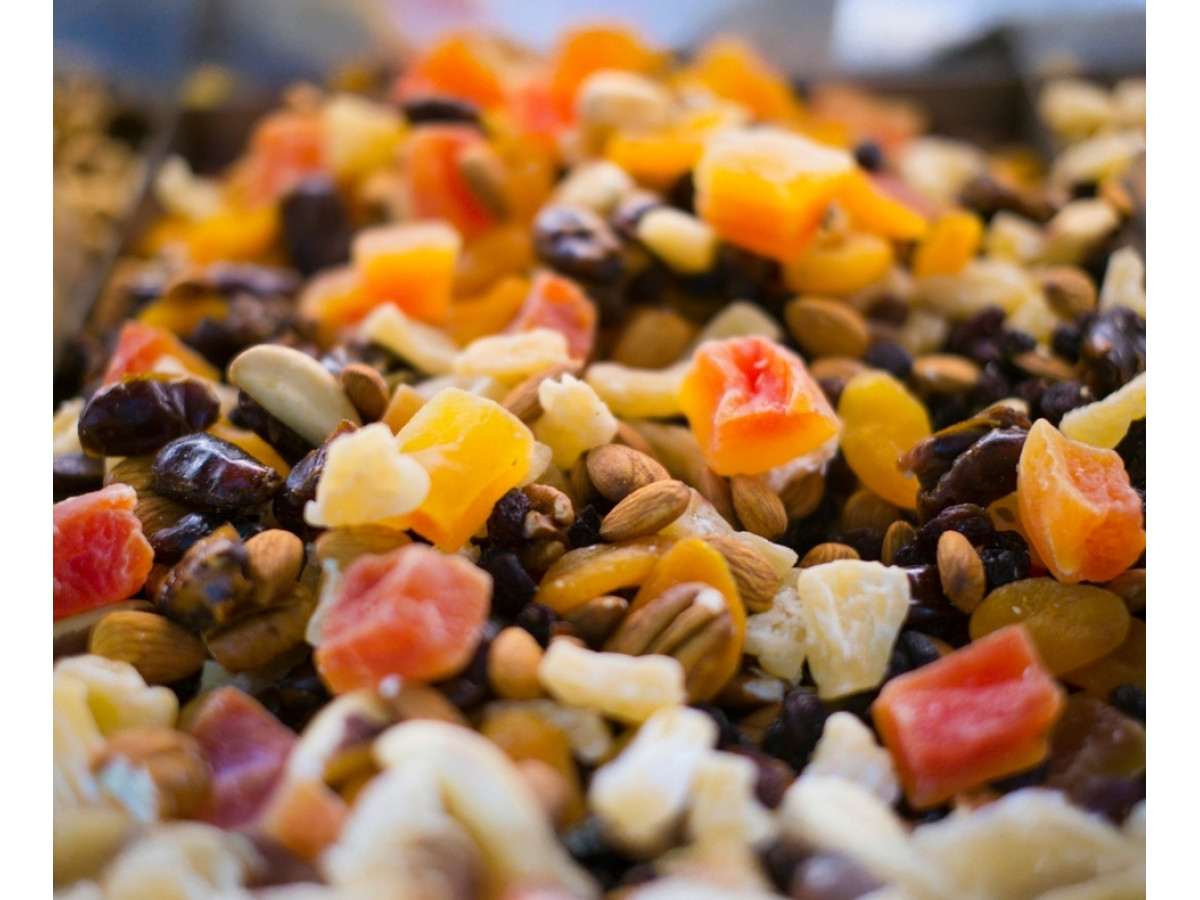
Nuts and dried fruits are often called a healthy snack — and for good reason. They are nutritious, convenient, and require no preparation. At the same time, they raise a common question: where is the line between benefit and excess, especially when it comes to calories and body weight?
Why Are Nuts and Dried Fruits Considered Healthy?
Nuts are a source of fats, protein, minerals, and fiber. They provide good satiety and can help maintain stable energy levels. Dried fruits, in turn, contain natural sugars, fiber, and micronutrients, preserving most of the properties of fresh fruit in a concentrated form.
Together, these foods often work well as a convenient snack — especially on the go or between main meals.
Calories: What’s the Concern?
The main reason for doubts about nuts and dried fruits is their calorie density. Nuts are high in fats, while dried fruits contain concentrated carbohydrates. This does not make them “bad,” but it does mean that portion size matters.
Calories themselves are not a problem if a product:
-
provides satiety;
-
contains valuable nutrients;
-
fits into the overall diet.
Problems arise when a healthy snack turns into uncontrolled handfuls eaten without attention.
How Many Nuts Is Normal?
For most people, a small handful of nuts at a time is considered optimal. In this amount, they:
-
provide good satiety;
-
do not overload the diet with fats;
-
are easy to combine with other foods.
Nuts work best as part of a snack — for example, together with fruit or yogurt — rather than as a large standalone portion.
Dried Fruits: The Benefit of Moderation
Dried fruits are sweet for a reason — they contain concentrated natural sugars from fruit. That is why it is important to be mindful of the quantity.
A small portion of dried fruits:
-
can provide quick energy;
-
pairs well with fats or protein;
-
is convenient for snacks on an active day.
Large portions without combining them with other foods, however, can function like a regular sweet snack — offering only short-term effects.
How to Combine Nuts and Dried Fruits
Nuts and dried fruits work best together — this combination creates a balance of fats and carbohydrates. Such a snack:
-
provides longer-lasting satiety;
-
is less likely to cause sharp energy spikes;
-
is convenient for travel, work, or study.
That is why nut and dried fruit mixes are often chosen as an alternative to sweets.
In everyday life, it is convenient to choose nuts and dried fruits from the nuts category, where products can be combined according to personal needs and context.
Can Nuts and Dried Fruits “Harm Your Figure”?
By themselves, these products are not a cause of weight gain. Quantity and frequency play the key role. If nuts and dried fruits:
-
replace sweets;
-
are used as part of a snack;
-
are combined with other foods,
they fit naturally into a balanced diet. If they are simply added “on top of everything” in large amounts, overall calorie intake increases almost unnoticed.
Common Mistakes
-
treating dried fruits as “limitlessly healthy”;
-
eating nuts without portion control;
-
using them as a main meal instead of a snack;
-
ignoring proper food combinations.
Summary
Nuts and dried fruits are nutritious and convenient foods that can be part of a daily diet. The key to their benefits lies in moderation and proper context.
When portions are controlled and the snack is balanced, they support both energy and well-being — without unnecessary extremes.




Write a comment