
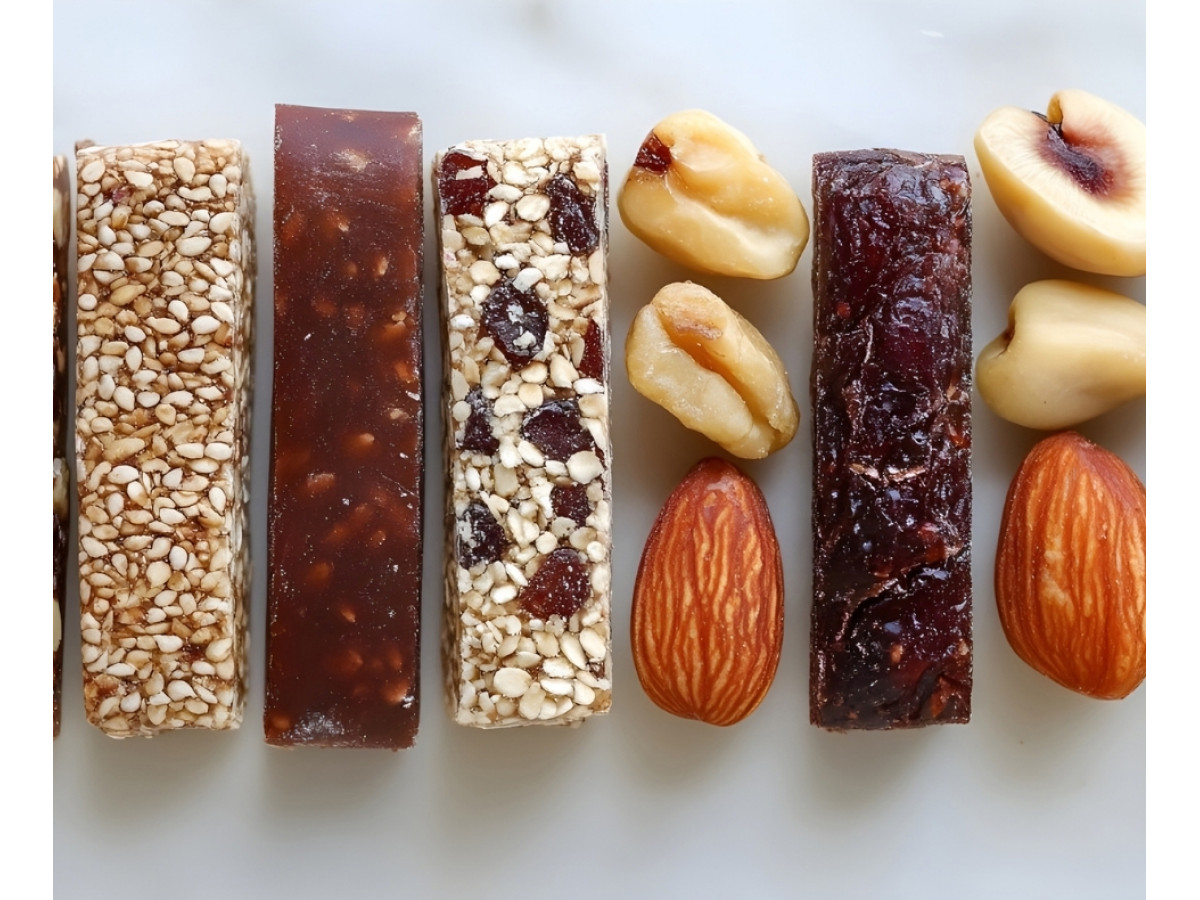
Bars have long become a popular snack format — they are convenient to take with you, require no preparation, and easily fit into an active lifestyle. At the same time, products with the same name can hide very different compositions and nutritional values. That is why it is important to understand how healthy bars differ from regular sweet snacks.
Why Bars Are Often Perceived as the Same Product
The bar format is convenient and familiar, so it is used for products with very different purposes — from a nutritious snack to a regular dessert. Their visual similarity creates the impression that all bars serve the same function, although the real difference lies entirely in their ingredients.
What Is Meant by Healthy Bars
Healthy bars are those that do not simply replace sweets, but, thanks to their nutritional profile, serve as a nourishing snack or an alternative to a traditional dessert. Their key distinction is the absence of harmful components and the presence of ingredients that provide real nutritional value.
Such bars usually:
-
contain no white refined sugar;
-
are free from refined fats and trans fats;
-
include nuts, seeds, dried fruits, and grains;
-
may provide vitamins and minerals;
-
often contain added protein.
Even if these bars are calorie-dense, the calories come from ingredients that provide benefits rather than from “empty” components.
Natural Bars: What It Means in Practice
The term “natural bars” does not have a precise formal definition, so relying solely on this label is not enough. In practical terms, it refers to bars made from recognizable food ingredients without artificial flavorings, colorings, or synthetic sweeteners.
In such products, sweetness is formed not by white refined sugar, but by natural ingredients — dried fruits or their derivatives — which also add texture and nutritional value.
Key Differences from Regular Sweet Bars
1. Source of Sweetness
In regular bars, sweetness is often provided by large amounts of added sugar or syrups. In healthy bars, natural alternatives are used instead, and they do not dominate the ingredient list or form its base.
2. Type of Fats
Healthy bars typically contain fats from nuts and seeds — natural fats that are part of whole foods. Mass-market bars often use palm oil or hydrogenated fats to ensure stability and extend shelf life.
Such fats are undesirable in a daily diet, as trans fats and excess saturated fats are associated with negative effects on cardiovascular health and do not provide nutritional value.
3. Satiety and Energy Stability
If a bar contains fiber, fats, and protein, this contributes to slower carbohydrate absorption and helps prevent sharp fluctuations in blood sugar levels. That is why such bars provide a longer-lasting feeling of fullness compared to sweets made mostly of sugar.
4. Nutritional Value
Healthy bars can complement the diet by providing energy, micronutrients, and protein. Regular sweet bars, as a rule, serve mainly a taste function.
When Healthy Bars Are Appropriate
Such bars may be appropriate:
-
as a snack between main meals;
-
while traveling or during a busy day;
-
as an alternative to dessert for those who want something sweet but without excess sugar and harmful fats.
In these situations, it is important that the bar is not just sweet, but nourishing and made with transparent ingredients. For daily use, it is better to choose healthy bars where each ingredient has a clear function.
A Common Mistake When Choosing Bars
One of the most common mistakes is evaluating bars only by their format or taste. Even products that look similar can differ significantly in composition and impact on the diet.
That is why natural bars should be viewed not as a universal category, but as a tool for informed choice — depending on needs and context.
Conclusion
Healthy bars differ from regular ones not by their shape, but by their content. They can be a nourishing snack or an alternative to sweets if they are free from harmful components and based on wholesome ingredients.
This format does not replace полноценous nutrition, but it can become a convenient and balanced element of a daily diet.
Write a comment